Most diaper-shopping advice handles the “what size?” question with a chart. Your baby weighs X pounds; here’s the size. Done.
The trouble is that the chart doesn’t match how actual diapers fit. The same baby — 22 pounds, eight months — can be cleanly inside Size 3 in one brand and bursting out of it in another, and the manufacturer’s printed weight range will tell you that both products fit. That’s not deceit on the manufacturer’s part; it’s the consequence of every brand cutting their diapers slightly differently while using the same numeric size labels. Below, we explain how our fit finder approaches the problem, and why the answers it gives sometimes look unexpected.
The chart problem
The standard chart goes something like this: “Newborn = under 10 lb. Size 1 = 8-14 lb. Size 2 = 12-18 lb. Size 3 = 16-28 lb. Size 4 = 22-37 lb.” Already you see the issue — sizes overlap. A 17-pound baby could be in 2 or 3. A 24-pound baby could be in 3 or 4. The chart doesn’t tell you which is *right*.
The chart problem gets worse when you compare brands. Pampers Swaddlers and Huggies Little Snugglers both label “Size 3” as fitting 16-28 lb. But Pampers cuts their diapers narrower in the rise (front-to-back length) and slightly more generous in the legs. Huggies does the opposite. A 22-pound baby with long torso proportions might be comfortable in Pampers but compressed in Huggies, even though the weight chart says both should fit.
This is also why “go up a size” is the canonical parent advice when a particular brand isn’t working. It’s almost always cheaper to switch brands within the same size than to graduate to a bigger size early — but most parents don’t have time for that experiment and just buy bigger.
What we do instead
The DiaperFitFinder fit finder doesn’t map weight to a single size. It returns *every* product whose stated weight range includes your child’s current weight, organized by how likely each is to be a comfortable fit at that exact weight.
Here’s the logic in plain terms:
**Step 1: Filter to products whose range includes the weight.** If you enter 22 lb, we surface every product whose manufacturer-stated range covers 22 lb. For most weights this returns dozens of options across brands and sub-lines.
**Step 2: Rank by position within the range.** A 22-pound baby is dead-center in the 16-28 lb range. A 17-pound baby is near the *bottom* of that range; a 27-pound baby is near the *top*. Babies at the top of a size are about to size up; babies at the bottom recently sized into it. We rank products where the input weight is near the middle of the range slightly higher than products where the input weight is near the edges, because middle-of-range is the most comfortable place to be in any given size.
**Step 3: For weights near the top of a range, also surface the next size up.** If your baby is at 27 pounds in Size 3, we’ll also show Size 4 results because that’s typically where parents are headed. The reverse isn’t true — a 17-pound baby at the bottom of Size 3 territory doesn’t need Size 2 added to their results, because if they’ve grown into Size 3 already, Size 2 is too small.
**Step 4: Within fit, rank by per-diaper cost.** The cheapest correctly-sized diaper, per unit, wins. We don’t rank by total pack price (which would unfairly favor small packs) or by retailer commission rate (which would corrupt our recommendations).
What this changes in practice
A few examples of how this logic produces different recommendations than a naive chart lookup would.
**Example 1: A 24-pound baby.** A chart says Size 3 (16-28 lb). Our fit finder agrees Size 3 is the default, but also surfaces Size 4 products (22-37 lb) because 24 lb falls inside both ranges. The parent gets to choose: stay in Size 3 for now, or buy Size 4 for the next pack since they’ll size up soon anyway. Either is a reasonable answer.
**Example 2: A 36-pound toddler.** A chart says Size 6 (35+ lb). Our fit finder shows Size 6 *and* the various “Size 7 / training pant / overnight underpants” products that cover the 30+ lb range. At this stage of diapering, the diaper-versus-pull-up question matters more than size — a 36-pound toddler may be transitioning, may be using overnight pants for sleep only, may still prefer tape-style for nights. We show the relevant options and let the parent choose by use case.
**Example 3: A 12-pound infant.** A chart says Size 1 (8-14 lb) or Size 2 (12-18 lb). Our fit finder shows both, but ranks Size 1 higher because at 12 lb the baby is *exiting* Size 1, not entering Size 2 — the family probably still has a stockpile of Size 1 to use up and is approaching the transition rather than past it. Size 2 is shown as the soon-to-need option.
What this doesn’t address
Fit isn’t only about weight. Three things that materially affect comfort don’t enter our calculation, because we don’t have data on them at scale:
**Body proportions.** Long babies, short babies, chunky babies, thin babies — at the same weight, a “long and lean” baby and a “short and chunky” baby need different cuts. Our recommendation is to start with the highest-ranked product, and if it leaks or rides up, try a different brand within the same size before going up a size.
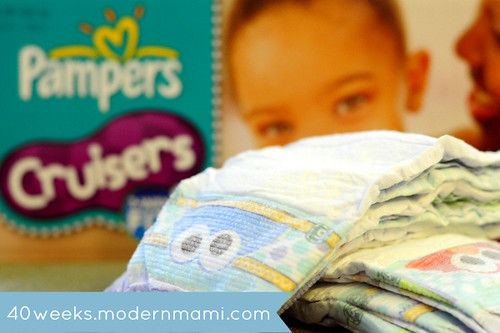
**Movement and skin sensitivity.** A pre-crawler doesn’t need the same diaper flexibility as a toddler running across the kitchen. We surface relevant cuts (Pampers Cruisers vs. Pampers Swaddlers, for example) but the activity level fit question is the parent’s call.
**Overnight versus daytime.** Most parents use a higher-absorbency diaper at night. We mark which products are overnight-rated, but the day-vs-night decision is yours.
These limitations are why our fit finder is a starting point, not a final answer. It narrows 425+ diaper products down to the 5-10 that are most likely to fit your specific child today, sorted by what they’d cost you. From there, you try one and adjust if it doesn’t work. That’s the realistic shopping pattern, and we’re trying to support it rather than pretend a chart has the answer.
*Try the fit finder yourself. If our recommendations don’t match what’s actually working for your baby, we’d appreciate the feedback — email us at contact@diaperfitfinder.com.*