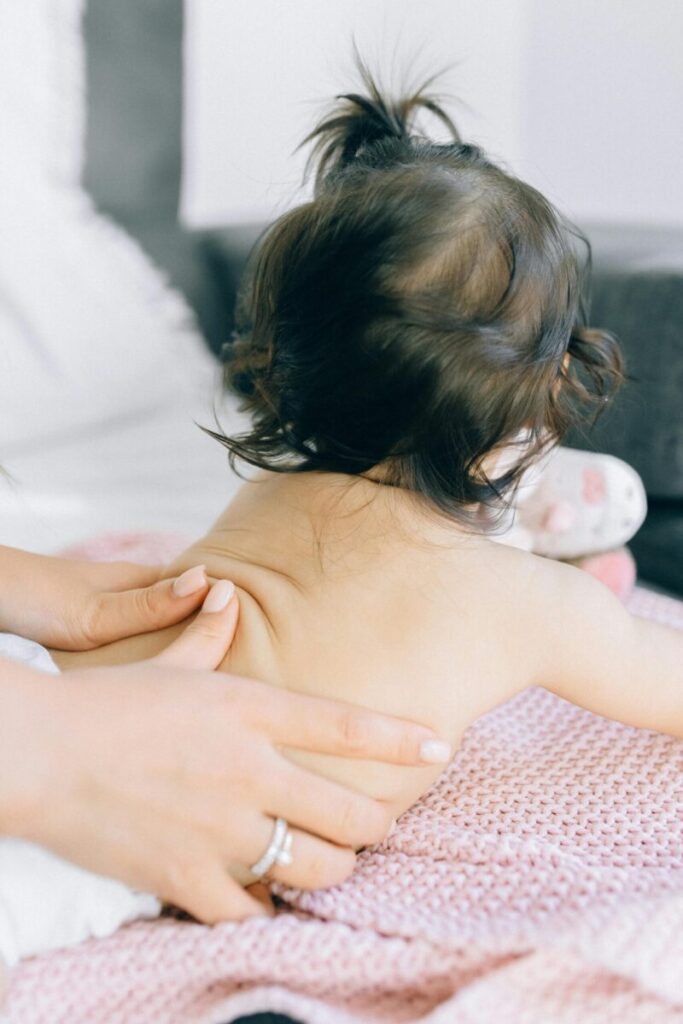
If you’ve landed on this page, you’ve probably already been through the cycle: try a diaper, see redness, switch brands, see less redness for a few days, then watch the rash come back. Or worse, your pediatrician has confirmed atopic dermatitis (the medical name for eczema), and now you’re wondering whether the diaper itself is making it harder to manage.
This is a guide for parents in that situation. We’ll cover what actually causes diaper-related skin reactions, which diapers are genuinely formulated for sensitive skin, and what isn’t a diaper problem even though it looks like one.
First: not all skin reactions are eczema
Before switching diapers, it’s worth identifying what’s actually happening. Pediatric dermatologists generally see four common diaper-area issues, and the right response is different for each:
Contact dermatitis from a diaper component. Redness develops where the diaper touches the skin — typically the leg openings, waistband, or where elastic bands sit. Often appears within hours of putting on a new brand. This is a diaper problem; switching brands often fixes it.
Wetness rash (irritant contact dermatitis). Diffuse redness across the diaper area, worse after long wears. Caused by extended contact with urine and stool, not by the diaper itself. Better diapers reduce it but won’t eliminate it; the real fix is more frequent changes and a barrier cream.
Yeast infection (candidal dermatitis). Brighter red rash with small “satellite” spots around the main rash. Often shows up in skin folds. Doesn’t respond to barrier creams — needs antifungal treatment from your pediatrician (clotrimazole or nystatin).
Atopic dermatitis (eczema). Dry, itchy patches that may appear in the diaper area but more typically appear on the cheeks, scalp, behind the knees, and elbow creases. Eczema is a constitutional skin condition, not a diaper reaction. The diaper area can flare because of eczema, but a perfect diaper won’t cure eczema.
If you’re seeing dry, scaly, itchy patches across multiple body areas (not just diaper area), this is eczema and you need a pediatric dermatology visit. Don’t waste time switching diapers in isolation.
If you’re seeing redness only in the diaper area that gets better when you change more often, that’s wetness rash. Buy more diapers and change every 2 hours, not a different brand.
If you’re seeing redness specifically where the diaper touches but not elsewhere, and the rash improves rapidly when you switch products, that’s contact dermatitis from the diaper. This guide is for you.
What diapers can actually cause skin reactions
The most common allergens and irritants in disposable diapers, ranked roughly by how often they cause problems:
- Fragrance. By a wide margin the most common cause of contact dermatitis. Even “lightly scented” diapers contain enough fragrance compounds to react in sensitive babies. Almost every dedicated sensitive-skin line is fragrance-free.
- Dyes. Brightly colored print elements (cute patterns on the front of the diaper, character licensing) use dyes that can cause localized reactions. Plain white diapers eliminate this risk entirely.
- Latex. Found in elastic bands and tabs in some baseline diapers. Increasingly rare in major brands but still appears in cheaper imports. All major US brands now use synthetic latex-free elastics, but check the package.
- Lotion components. Some diapers (especially cheap ones, paradoxically) contain a “soothing lotion” pre-applied to the top sheet. Aloe and petrolatum can be irritating to sensitive skin even though they’re marketed as gentle.
- Adhesives. The chemistry of tab adhesives can react with skin. This is rare but documented, especially in babies whose skin barrier is already compromised by eczema.
The “clean” sensitive-skin diaper category exists to remove these one by one. The best of these products are fragrance-free, dye-free, lotion-free, latex-free, and use hypoallergenic adhesives. Not all “sensitive” diapers actually do all of this — read packaging carefully.
The actually-good sensitive-skin diapers
We’ve used everything in this category for either testing or with our own kids over the years. Here’s what we’d actually recommend, in tiers.
Tier 1: For diagnosed eczema or repeated reactions
These are the products to try first if your baby has confirmed eczema or has reacted to multiple “regular” sensitive-skin lines.
Coterie The Diaper. The most thoroughly designed sensitive-skin product on the market. Plant-based fluff, organic cotton top sheet, no fragrance, no dyes, no latex, no parabens, no lotions, no chlorine bleaching. Used in some pediatric dermatology practices as the recommended starting point for eczema-prone babies. Subscription-only, premium pricing — roughly 2-3x baseline diapers per unit.
What it does well: minimizes every common irritant in one product. The top sheet is the softest among any diaper we’ve tested. Babies with significant skin sensitivity who’ve reacted to other “sensitive” lines often tolerate Coterie.
The catch: cost. For a heavy diapering household, Coterie can run $1,800-$2,400/year. If your insurance or HSA covers diapers as a medical expense for diagnosed conditions, ask your pediatrician — sometimes prescription pads make sensitive-skin products eligible.
Bambo Nature. Danish brand certified by the Nordic Swan Ecolabel (more rigorous than US “eco” certifications). Plant-based across multiple layers, fragrance-free, dye-free, certified low-allergen. Used widely in European hospitals’ pediatric units.
What it does well: rigorous third-party certification. The Nordic Swan certification process tests for allergens, irritants, and fragrance compounds at much lower thresholds than US standards require. If you want documented evidence that a diaper is hypoallergenic, this is the strongest paper trail.
The catch: limited US availability and higher pricing. Often ordered online from specialty retailers. Pricing is similar to or slightly above Pampers Pure.
Tier 2: Strong sensitive-skin options
For typical sensitive skin or mild reactions, these are the strong “first switch” options before going to Tier 1.
Pampers Pure Protection. Pampers’ clean line. Fragrance-free, dye-free, paraben-free, latex-free, chlorine-free, with a premium cotton-blend top sheet. The most accessible Tier 2 option — available at every major retailer.
What it does well: hits most of the right notes at a more reasonable price than Tier 1. Soft top sheet that’s noticeably better than baseline Pampers Swaddlers. Solid absorbency and leak protection (sensitive-skin formulations sometimes compromise on these; Pampers Pure doesn’t).
The catch: still uses some petroleum-derived components in the absorbent core. Babies who react to standard SAP (super-absorbent polymer) may need to step up to Tier 1.
Honest Diapers. Patterned outer makes them visually distinct, but the formulation is genuinely sensitive-skin: fragrance-free, dye-free in the body of the diaper (the colorful prints use plant-based pigments per the manufacturer), plant-based fluff, chlorine-free. Available at Target, on Amazon, and direct.
What it does well: balances sensitive-skin formulation with mainstream availability. Easier to find than Coterie or Bambo Nature; cleaner than Pampers Pure on paper.
The catch: runs small. If your baby is borderline between sizes, size up. Performance is solid but not class-leading; some parents report leaks at high saturation.
Huggies Special Delivery. Huggies’ clean line. Plant-based ingredients, fragrance-free, dye-free, latex-free. Sold at most major retailers.
What it does well: comparable formulation to Pampers Pure at a slightly lower price point. Better fit for chunky babies than Pampers Pure (Huggies generally fits bigger).
The catch: not as polished as Pampers Pure overall. Top sheet is slightly less soft. Some parents report adhesives reactions despite the “hypoallergenic” claim — uncommon but documented.
Tier 3: Acceptable sensitive options at lower cost
If budget is tight and your baby’s sensitivity is mild, these get the job done.
Up & Up Sensitive (Target). Target’s house-brand sensitive line. Fragrance-free, dye-free, with a softer top sheet than baseline Up & Up. Available at every Target.
What it does well: cleanest store-brand sensitive option, at a meaningfully lower price than name-brand sensitive lines.
The catch: still has petroleum-derived absorbent components and synthetic top sheet. Fine for most sensitive babies; not the right choice for diagnosed eczema.
Hello Bello. Founded as Honest’s competitor at lower price. Fragrance-free, dye-free, plant-based pulp, available at Walmart.
What it does well: cleaner ingredients than baseline Walmart options at a still-affordable price.
The catch: leg cuffs are flimsier than name brands. Sensitive-skin formulation is good; performance is mid-tier.
What to do beyond switching diapers
Switching to a sensitive-skin diaper is necessary but often not sufficient. The full protocol for eczema-prone or reactive skin includes:
Change every 2 hours, not 3-4. Even the best diaper held against irritated skin for too long causes flares. If your baby has eczema in the diaper area, the change cadence is more important than the diaper brand.
Apply a barrier cream at every change. A thin layer of plain petrolatum (Vaseline) or zinc oxide (Desitin, Boudreaux’s Butt Paste) creates a physical barrier between the skin and any irritants. Don’t skip this on the assumption that the “premium” diaper is sufficient — barrier cream and good diapers work together, not as alternatives.
Skip wipes with fragrance. This is overlooked. You can buy a beautifully clean diaper and then wipe with fragranced baby wipes that undo all the work. WaterWipes, Pampers Sensitive (formerly Aqua Pure), and Honest Sensitive Wipes are all fragrance-free.
Diaper-free time daily. 15-20 minutes of skin-to-air time on a waterproof mat does more for diaper rash than any product. Build it into nap-time routines if you can manage the cleanup risk.
Treat eczema separately. If your baby has eczema, the diaper area needs the same eczema treatment your pediatrician prescribed for elsewhere. This usually means a thin layer of low-strength steroid cream (hydrocortisone 1% or prescription tacrolimus) during flares, and a daily moisturizer (Cetaphil, Aquaphor, Aveeno Eczema Therapy) at every change. Sensitive-skin diapers help; they don’t replace eczema treatment.
A practical sequence
If you’re starting from scratch and want a step-by-step approach:
- Switch to Pampers Pure or Huggies Special Delivery for two weeks. Use fragrance-free wipes. Apply barrier cream at every change. Change every 2 hours.
- If symptoms improve substantially, you’ve found your category. Stay there or experiment with other Tier 2 options once stable.
- If symptoms improve partially, step up to Coterie or Bambo Nature for two weeks. Continue all other measures.
- If symptoms persist after 4 weeks of consistent care across both diaper categories, see your pediatrician or pediatric dermatologist. The diaper itself is probably not the cause; investigate eczema, food sensitivities, or contact allergens elsewhere in the baby’s environment.
- If symptoms only flare occasionally, you may have found the right diaper but need more frequent changes during specific times (overnight is common; the long change-cycle plus extended wetness compounds the irritation).
Don’t bounce between brands every few days. Each switch needs at least a week to evaluate. Skin reactions take time to develop and time to resolve — what you see on day 2 isn’t the final answer.
The honest cost discussion
Sensitive-skin diapers cost more. This is real, and for many families it’s a meaningful budget increase. Here’s the per-diaper math at typical prices for size 3:
- Pampers Swaddlers (baseline): $0.28
- Up & Up Sensitive: $0.20
- Pampers Pure: $0.32
- Honest: $0.40
- Bambo Nature: $0.42
- Coterie: $0.52
- Kirkland Signature (for context, baseline store brand): $0.16
If you switch from baseline Pampers to Pampers Pure, you’re spending about 15% more per diaper — roughly $200/year on a typical use rate.
If you switch to Coterie, you’re spending nearly twice as much — roughly $1,200/year more than baseline Pampers.
Some families absolutely should make this investment; others are better off with Pampers Pure plus rigorous changing routines. The diaper that gets your baby through the day comfortably matters more than maxing out on product features. A “perfect” diaper changed every 4 hours will cause more rash than Pampers Pure changed every 2 hours.
If your baby’s skin reactions are severe, persistent, or accompanied by other symptoms (poor weight gain, unusual stools, breathing issues), please see your pediatrician. Skin reactions can be the visible part of more complex food allergies, immune issues, or genetic skin conditions. We provide diaper guidance; your pediatrician provides medical care.